Maldives: Paradise in the Indian Ocean
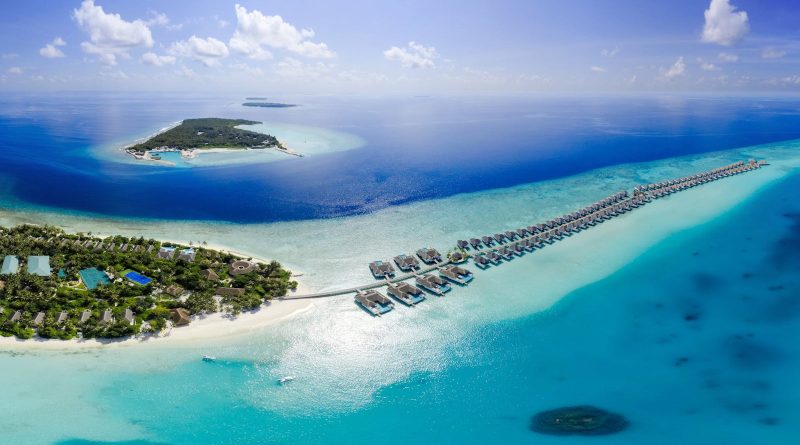
The Maldives consists of 1,192 coral islands scattered across 26 atolls in the Indian Ocean, of which about 200 are inhabited and 150+ are exclusive resort islands. This is the only country in the world where each resort is on its own island — check-in is often by seaplane, and breakfast comes with sharks cruising past your overwater deck. It is also the lowest-lying country on Earth, which makes visiting now a choice with a deadline attached.
When to go
Dry season (November–April) is peak: sunny, 28°C, calm seas. Wet season (May–October) brings short but intense tropical showers, with prices up to 50% lower. December and the Christmas / New Year holidays are the most expensive weeks of the year — often 3x standard rates.
How the Maldives works
You fly into Velana International Airport (MLE) in Malé, the capital. From there, most travelers transfer to their resort island by:
Speedboat — for resorts within 40km of the airport. 30–60 minutes. Used by most North Male Atoll resorts.
Seaplane — for remote resorts. 20–50 minutes. Beautiful but noisy and only operates in daylight. Costs $500–$800 round trip per person and is typically arranged by the resort.
Domestic flight + speedboat — for the most remote atolls (Baa, Raa, Lhaviyani, South Ari). Faster over long distances than seaplane.
You are effectively locked to your resort island. Day trips to other islands, uninhabited sandbanks, or dive sites are available but priced accordingly.
Picking the right atoll
North Male Atoll — closest to the airport, most convenient, often visited by first-timers. Iconic resorts: Soneva Jani (the original premium), Cheval Blanc Randheli, Four Seasons Landaa Giraavaru.
South Ari Atoll — the best whale shark sightings year-round. Great for divers and marine life enthusiasts. Conrad Rangali is iconic.
Baa Atoll — a UNESCO Biosphere Reserve. Hanifaru Bay (May–November) is the world’s best manta ray plankton-feeding site. Soneva Fushi is the aspirational stay.
Lhaviyani Atoll — great surf and diving, fewer tourists. Kanuhura and Hurawalhi are top picks (the latter has an underwater restaurant).
Raa Atoll — emerging destination. Joali and Intercontinental Maamunagau are excellent, and crowds are thinner.
Resorts at every price point
Budget ($200–$400/night) — local-island guesthouses on inhabited islands like Maafushi, Dhigurah, or Ukulhas. You trade private beach for cultural immersion. Alcohol only on day-trip yachts or at “picnic” sandbanks.
Mid-range ($500–$900/night) — full-service resorts like Kuramathi, Meeru, Kandima, Dhigali. All-inclusive options get the best value.
Luxury ($1,200–$3,000/night) — Six Senses Laamu, Velaa, Cheval Blanc, Waldorf Astoria Ithaafushi.
Ultra-luxury ($5,000+/night) — Soneva Jani, Soneva Fushi, The Nautilus, Joali. Private butlers, overwater slides, cinema on the sand.
What to actually do
The Maldives is primarily a place to not do much. But the must-tries:
Snorkel the house reef — most resorts have one steps from the beach. The coral bleaching of the 2010s has partially recovered in many atolls; the reefs at Baa, Ari South, and Lhaviyani are still spectacular.
Swim with whale sharks — South Ari Atoll, year-round. Tour boats look for the sharks; when spotted, you slide into the water with mask and fins.
Dive — the Maldives has 600+ dive sites. Manta Point, Kandooma Thila, Fish Head, and any night dive in Baa are world-class. PADI certification courses are widely available.
Sunset dolphin cruise — nearly every resort runs one; pods of 50+ spinner dolphins are common.
Sandbank picnic — your resort drops you and a hamper on an uninhabited sandbank for a few hours. Honeymoon gold.
Overwater spa — a 90-minute Balinese massage while watching rays glide under the glass floor of the treatment room.
Food and drink
Resort dining is the standard and usually excellent, often with multiple restaurants and themed nights. Maldivian cuisine is coconut-and-fish-heavy — mas huni (tuna, coconut, onion, chili) is the classic breakfast, often with roshi flatbread. Tuna curries (garudhiya) and fried breadfruit are local staples.
All-inclusive packages are usually worth it given resort-island pricing ($12 beers, $60 lobster). Dry days during Ramadan affect some resorts (most still serve foreigners).
Practical 2026 tips
Passport + 30-day visa on arrival (free) for most nationalities. No vaccinations required.
The Maldives introduced a “Green Tax” of $6/night for most resorts in 2024, paid at checkout.
Bring reef-safe sunscreen; most resorts no longer allow oxybenzone-based products.
Seaplane operations end at sunset — book flights that let you arrive in Malé before 2pm for same-day transfers.
The Maldives is moderately conservative outside resorts — modest dress and no alcohol on inhabited islands.
Climate change is real here. The outer atolls are already losing beach area to rising seas. The government has announced plans for floating cities by 2030.
Final word
The Maldives is the world’s most polished “desert island” fantasy, delivered by industrial-strength hospitality. Go once in your life. Spend more than you planned. Sit very still and look at the water.