
Rome: Walking Through History
Rome is the only city where you can walk past a 2,000-year-old triumphal arch on your way to dinner. The capital of Italy layers ancient Roman, medieval, Renaissance, and Baroque eras on top of each other in a single neighborhood, and the locals barely notice. For a first-time visitor in 2026, the trick is to not drown in the magnificence.
When to go
April, May, and October are golden. Clear skies, wisteria in bloom, manageable crowds. Avoid July and August — 38°C temperatures and closed restaurants as Romans leave for the coast. November and February are cheap, quiet, and rain-prone. Holy Week (the week before Easter) is intense: beautiful ceremonies, impossible hotel prices.
Where to base yourself
Centro Storico — the historic center. Walk everywhere. Pricier but you’re in the middle of it all.
Trastevere — on the west bank of the Tiber. Cobblestone alleys, ivy-draped trattorias, late-night wine bars. Our top pick for atmosphere.
Monti — near the Colosseum, but hip rather than touristy. Great restaurants, boutique shops, young crowd.
Testaccio — working-class, deeply Roman, food-focused. The city’s best butcher shops and Trattoria Lilli.
Prati — near the Vatican. Elegant, quieter, residential.
The essential sites
Colosseum, Roman Forum, Palatine Hill — buy a combined ticket weeks ahead. Go at opening (8:30am) to beat the crowds. The Forum is best understood with a guide or audio app — otherwise it looks like a pile of rocks. Book the Arena Floor add-on for the Gladiator-eye view.
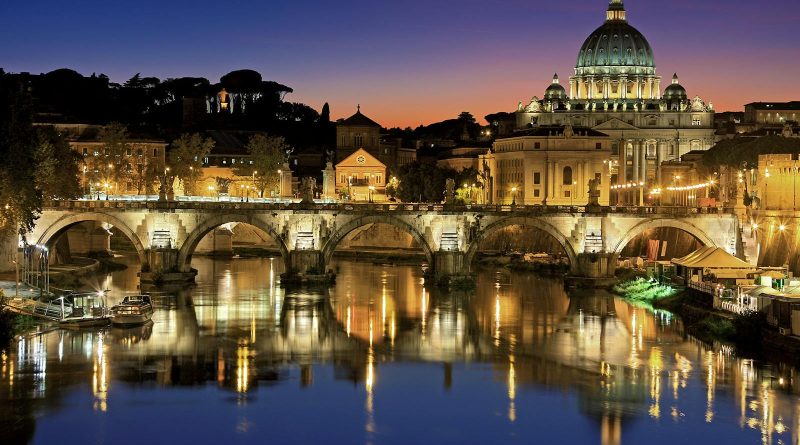
Vatican Museums and St. Peter’s Basilica — book online with a timed entry. Go on Tuesdays, Wednesdays, or Thursdays. St. Peter’s itself is free; the museums end at the Sistine Chapel. Early-morning Vatican tours ($80+) are worth the splurge.
Pantheon — the best-preserved building from ancient Rome. Free entry (as of 2023, a €5 fee was introduced, but it’s still the best deal in Europe). Don’t miss the oculus when it rains.
Trevi Fountain — go at 6am for the classic photo. By 9am, it’s packed.
Piazza Navona, Campo de’ Fiori, Piazza di Spagna — walk these in a morning loop. The Spanish Steps are a disappointment; the Navona fountains are not.
Borghese Gallery — Bernini’s sculptures and Caravaggio’s paintings in a former cardinal’s villa. Timed tickets, two-hour slots. Our favorite museum in Rome.
Castel Sant’Angelo — the papal fortress with a rooftop view to rival any in Europe.
How to eat
The Romans are proud, conservative eaters. Order what locals order and you’ll eat spectacularly. Five dishes you must try:
Cacio e pepe — pecorino Romano, black pepper, pasta water, and tonnarelli. That’s it. Felice a Testaccio and Roma Sparita are destination-worthy.
Amatriciana — guanciale (cured pork cheek), tomato, pecorino. Bucatini is the proper shape.
Carbonara — eggs, guanciale, pecorino, pepper. No cream. Ever. Try Armando al Pantheon or Salumeria Roscioli.
Saltimbocca alla romana — veal, prosciutto, sage, white wine. A Roman classic.
Carciofi alla romana (braised artichokes) or alla giudia (Jewish-fried). Best in the former Jewish Ghetto at Nonna Betta or Piperno.
For pizza: Pizzarium (by Bonci) for slice-style pizza al taglio, Emma for full Neapolitan rounds, Roscioli’s focaccia for lunch.
Gelato: Giolitti (traditional, near the Pantheon), Fatamorgana (inventive, multiple locations), Gelateria del Teatro (best pistachio in the city).
Hidden gems
Basilica di San Clemente — three layers of history: a 12th-century basilica on top of a 4th-century church on top of a 1st-century Mithraic temple. Self-guided visit for €10.
Appian Way — the ancient Roman road, lined with tombs and aqueducts. Sunday mornings are car-free — rent a bike from the Appia Antica Regional Park visitor center.
Protestant Cemetery (Cimitero Acattolico) — where Keats and Shelley are buried, in a quiet corner of Testaccio. Peaceful and beautiful.
Aventine Keyhole — look through the door keyhole at the Priory of the Knights of Malta for one of Rome’s best secret views.
Villa Farnesina — Raphael frescoes and fewer crowds than anywhere else in Rome.
Getting around
Central Rome is walkable in every direction. The metro has only three lines (A, B, and C) and doesn’t serve many historic sites — the Romans can’t dig without hitting ruins. Buses are slow but cover everywhere. A weekly pass is €24. For longer distances, taxis are affordable (€12 from Termini to the Vatican); use free apps like itTaxi or FreeNow.
Watch for pickpockets on crowded buses (#64 is famous for them) and at tourist sites. Keep bags zipped and across your body.
Day trips
Tivoli — Villa d’Este’s fountain gardens and Hadrian’s Villa. Both UNESCO sites. 40 minutes by train.
Ostia Antica — the ancient Roman port, 25 minutes by train. Less crowded than Pompeii and almost as impressive.
Orvieto — hilltop Umbrian town, Gothic cathedral, underground tunnels. 75 minutes by train.
Florence — 90 minutes on the Frecciarossa high-speed train. Fine for a day trip but better as a 2-night extension.
Practical notes for 2026
Rome has banned most tourist buses from the historic center. Walking is the answer. Comfortable shoes are non-negotiable — cobblestones are brutal.
Most museums and attractions now require online pre-booking with timed entry. Don’t assume you can walk up. Book 2–4 weeks ahead for peak season.
Dining: lunch is typically 1–3pm, dinner 8–11pm. Restaurants that serve continuously are tourist traps. Tipping is not expected; a €1–€2 coin is appreciated.
Final word
Rome is not a museum city — it’s a living, chaotic, beautiful mess that happens to have extraordinary monuments scattered through it. Slow down. Sit in a piazza with an espresso at 10am. Walk aimlessly. Eat lunch for two hours. The city gives everything to those who don’t rush it.